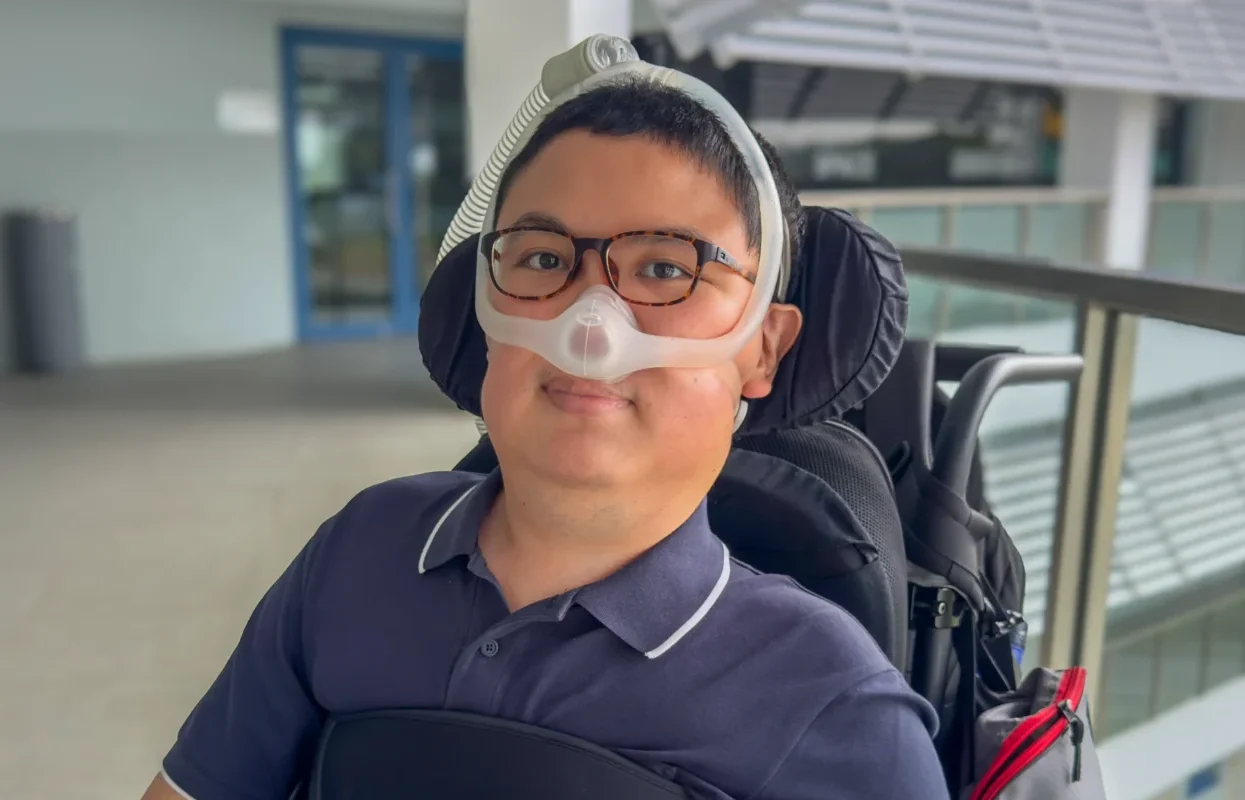
Shalom Lim
Before I Die, Let Me See More Dignity for Our Disability Community
Shalom Lim is a leader in the disability space and Managing Director of Rebirth Ensemble, an arts and accessibility studio.
As a disability advocate, what is one of the biggest areas you wish more people paid attention to?
In everything I do, I think accessibility and universal access is always an underlying topic that drives me to try harder.
We’ve come a long way in making our buildings and public spaces more wheelchair-friendly. And many new facilities are disability-friendly in other ways today – libraries and museums now have calm rooms for people who are neurodivergent, most new elevators come with voice announcements for the vision impaired, and we have a lot more accessible washrooms now (what a relief, pun intended).
Public transport subsidies for persons with disabilities has also opened up much more opportunities for going out, especially considering that 70% of people with disabilities report social isolation that negatively affects their well-being.
But there’s definitely still gaps. While our public transport systems like MRT and buses do accommodate for most wheelchairs, there’s always some percentage of people who have to rely on larger wheelchairs or mobility aids. And these people won’t be able to get on buses and trains easily, or even safely. And that’s before pointing out that not every building or venue has public transport access nearby.
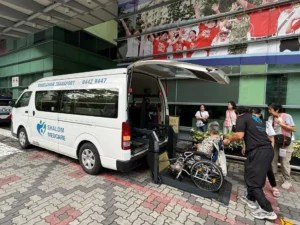
Image Credit: Shalom Medcare (Instagram)
This is why wheelchair transport businesses are still very much needed. These are specialty companies that operate customised vans equipped with ramps, wheelchair lifts, and strap buckles to secure wheelchairs of all sizes. These companies also have staff who know how to assist wheelchair users safely – grabbing on to someone with specific spinal or muscular-skeletal conditions can result in serious injuries if you don’t do it correctly.
But, of course, there’s a catch. These wheelchair transport services are expensive. Not only because it’s a specialty service, but because there’s no subsidies available, since it’s considered a form of private transport.
Still, it’s an essential service for someone like me. I need this kind of transport whenever I go for my medical appointments, or just whenever I want to leave the house. And every time that happens, it’s an expense of $100 or more to get both ways.
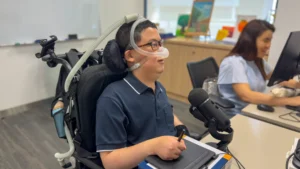
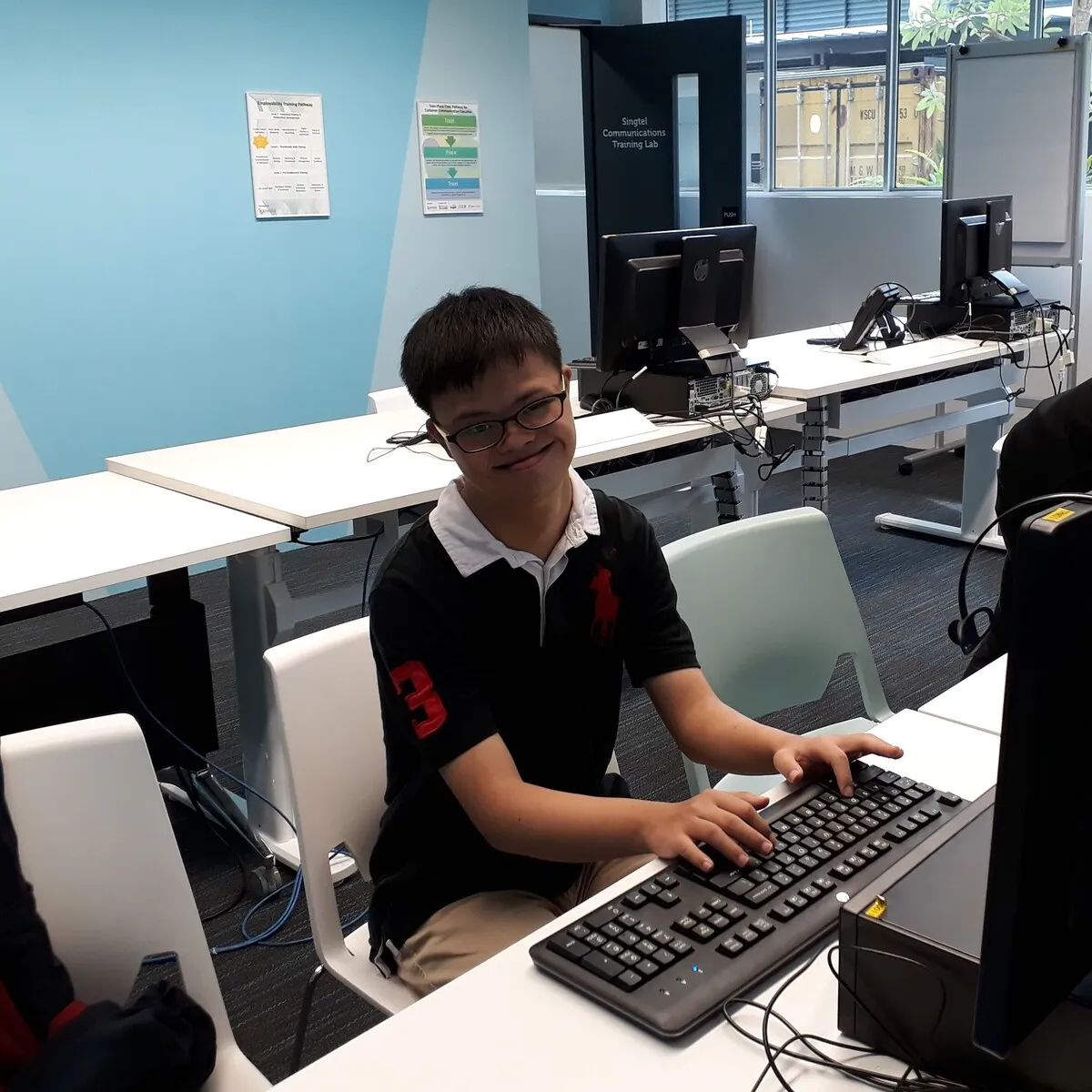
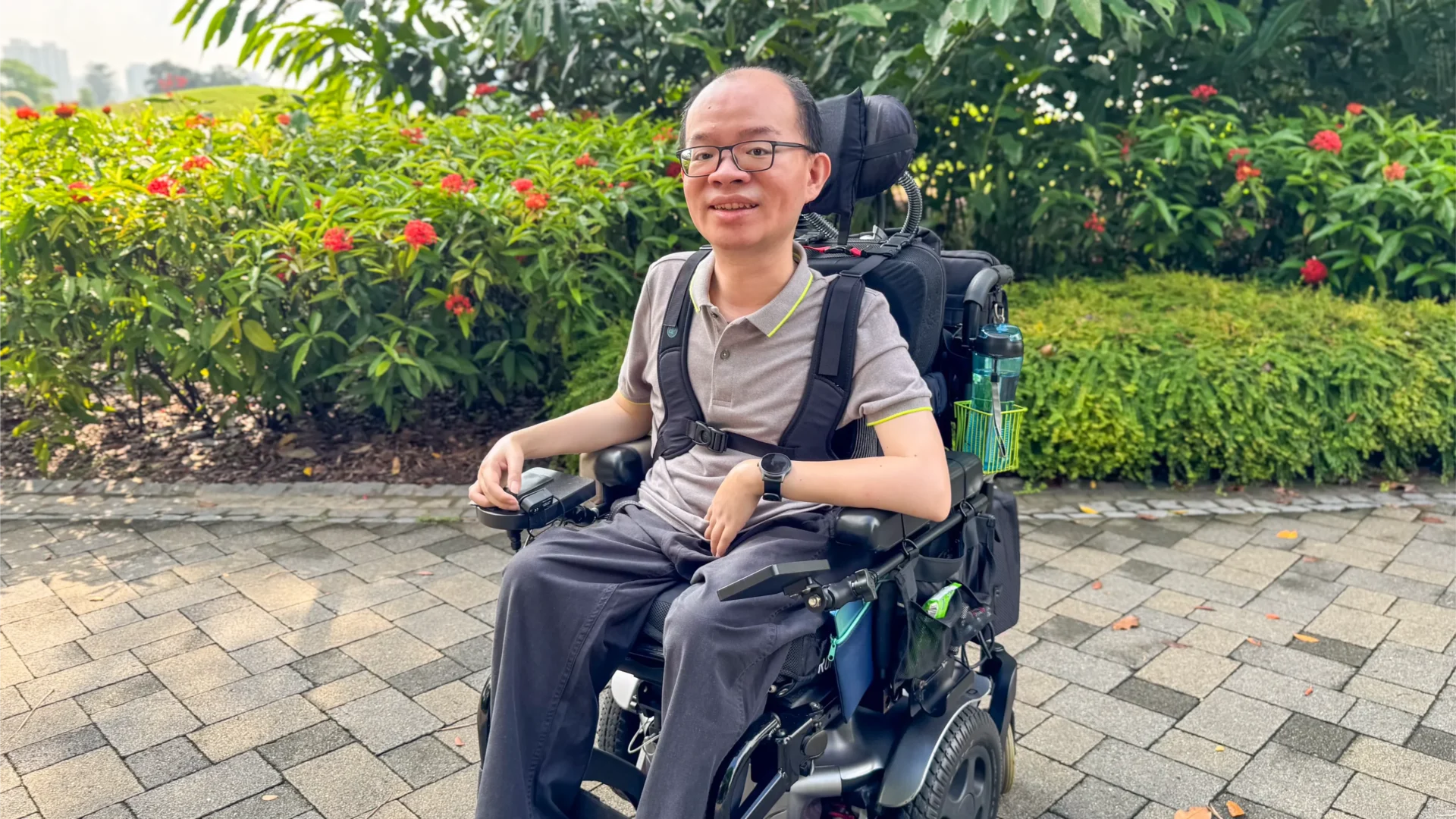
Shalom working at his computer, controlled using a tablet and stylus, instead of a mouse and keyboard.
I bring this up because it honestly comes up as an issue quite frequently. Being in the position I’m in, I do get requests to speak at events, or to attend in-person feedback sessions. But sometimes these event organisers or collaborators simply aren’t aware of everything it takes for us to simply leave the house. If the discussion of transport reimbursement gets brought up (which isn’t always a guarantee), some are even dubious about the cost and ask why it’s so expensive.
For this reason, the topic of wheelchair transport services is one I keep bringing attention to. I hope it can get more recognition, especially some of us rely on it as a necessity.
What are some of the other causes you advocate for?
Rare diseases (like mine) aren’t often well-understood by members of the public, so it’s something I make a point of spreading awareness about when I can.
I personally have Duchenne muscular dystrophy, which means my muscles, including my heart, are weak. I also have difficulties breathing, which is why I use a BiPAP machine to help me breathe. Less than 5 in 100,000 people worldwide have this condition.
To educate more people about my condition, I write a column for the website Muscular Dystrophy News. It’s not the New York Times or anything of the sort, but it’s a platform where I can discuss my personal experiences with muscular dystrophy, and share it as a resource to raise awareness among the public or even to encourage others like me.
I also currently sit on the board of two charities: K9 Assistance, which advocates for the adoption and acceptance of assistance animals, and DPA Singapore, which advocates for the needs of persons with disabilities.
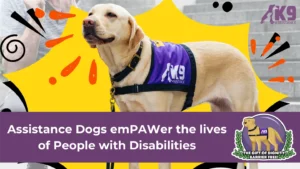
With K9 Assistance, the cause of assistance animals is one that I care a lot about. My family has a pet dog (not an assistance animal), and he brings us so much joy. But I’ve seen first-hand how animals can be trained to be so much more. It’s truly amazing.
In many other countries, animals have been trained in all sorts of ways to assist people with disabilities. Of course, we know of guide dogs for the visually impaired, which we have here in Singapore.
But there’s also psychiatric assistance dogs for people with conditions like PTSD, schizophrenia, autism, and other types of neurodivergence. They are trained to help during times of stress, especially when safety is a concern. Sometimes, they lean on their handlers during episodes, or lead their handlers to a safe place if the episode is happening somewhere dangerous, like at a road crossing.
People who are deaf and hard of hearing can also have hearing dogs. These animals alert their handlers when the doorbell rings, when someone is speaking and their handler isn’t hearing them, when there’s cars at a loud and busy road crossing, or even when there’s an alarm during emergency situations like a fire.
These are some examples of service animals which haven’t come to Singapore yet, but have some major potential to help people with disabilities.
And with DPA Singapore, a lot of the work that we’re focusing on involves advocating for more accessible policies and practices. For example, how we can make voting ballad cards accessible and private for people with vision impairment using stencils, or simply ensuring the selected venues are wheelchair-friendly.
What has it been like being a board member of a charity?
I’m still trying to learn how I can better serve in the positions I’m in. There’s so much that goes into running a charity organization besides raising donations and increasing public awareness.
As representatives of the organization, us board members have to fulfil a role as ambassadors of sorts for the cause. Sometimes, that means speaking up about the topic in front of stakeholders, as experts with lived experiences. Other times, it means admitting we don’t know enough, and seeking more information and feedback on how we can do better as a society.
There’s also all the other boring things that nobody likes to think about when it comes to the non-profit sector. Like governance and regulatory obligations, or how to prioritise the allocation of your limited resources when there’s still so much to be done.
But when there’s a cause we care about, these are the things we have to grapple with. It’s been a humbling experience and I hope to be able to do more as I continue to learn.
Who were the people who inspired you to start your journey as a disability advocate?
I’ve definitely been inspired by other leaders in the disability space.
Sherena Loh, founder of the Muscular Dystrophy Association Singapore (MDAS), is someone I’ve known for a very long time. When I was a little boy, she’d regularly check in, especially when I wasn’t doing well.
Cassandra Chiu, founder and current Executive Director of K9 Assistance, is another role model I look up to greatly. She’s quite a fiery person who doesn’t quit, and I do admire that about her.
Both these women have shown me what’s possible in the area of disability advocacy, and that we can push for causes we care about when we have the right people and perseverance to do so. They’ve also personally mentored me along my journey, which I’m very grateful for.
What is your hope for the future of disability inclusion in Singapore?
To put it simply, I hope for us to achieve true dignity and access for everyone.
For us persons with disabilities, dignity isn’t just about having access to medical treatment or being able to find a job. It’s about being empowered with choices over our futures, being respected as an equal and fellow human being, being a part of society rather than “that other group” in our communities.
And a big part of this comes down to access. Access to the resources we need to succeed, access to the same recreational spaces everyone enjoys. Access to opportunities to grow and become the people we want to be.
I’m very encouraged by everything that has already been done. And I hope more of it comes to fruition, within my lifetime and beyond.