Dr Azariah Tan
The Award-Winning Concert Pianist… Who’s Deaf
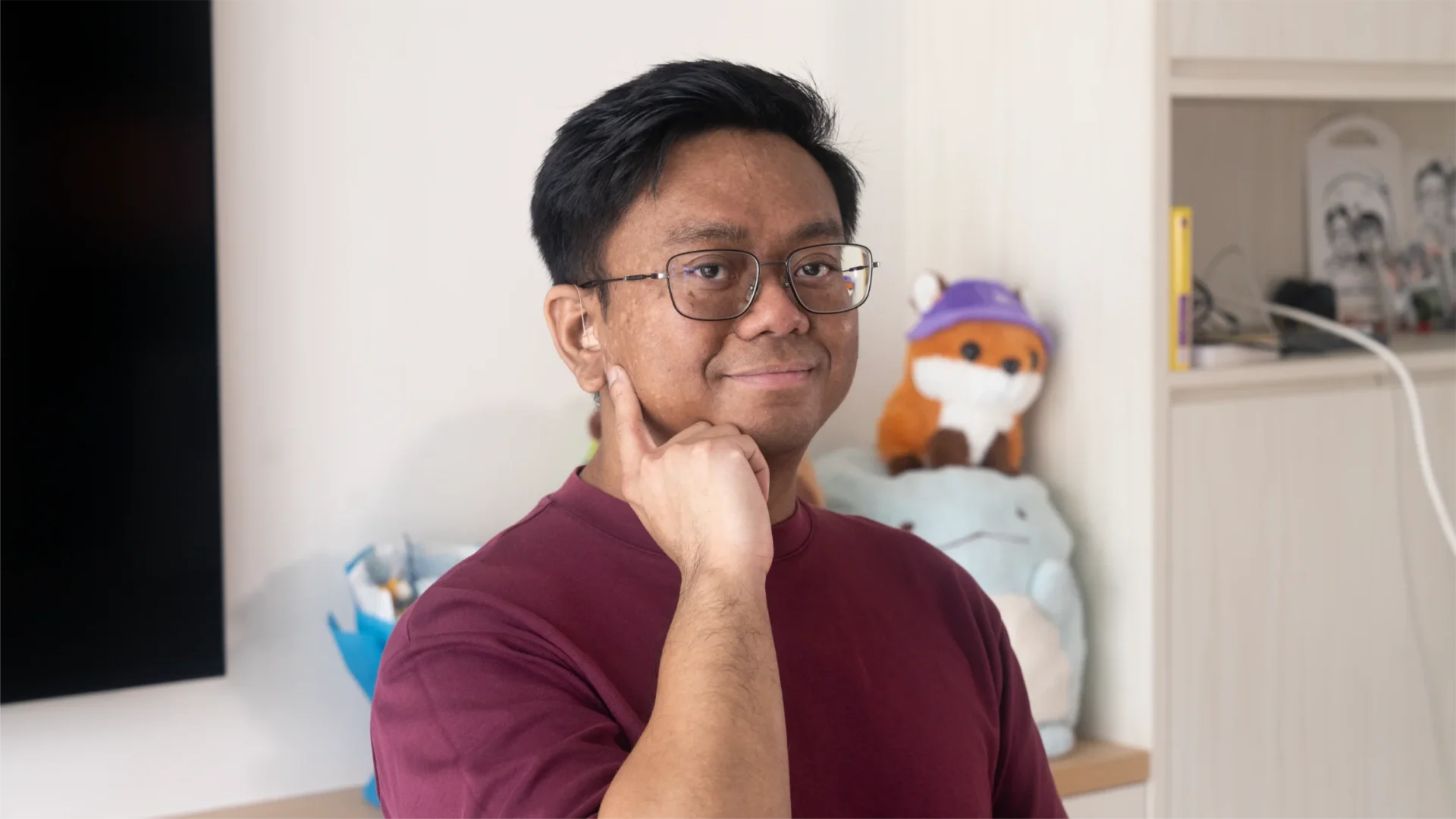
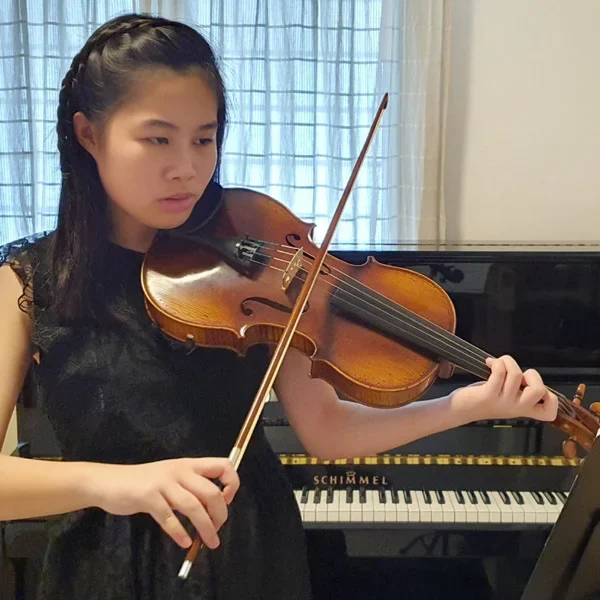
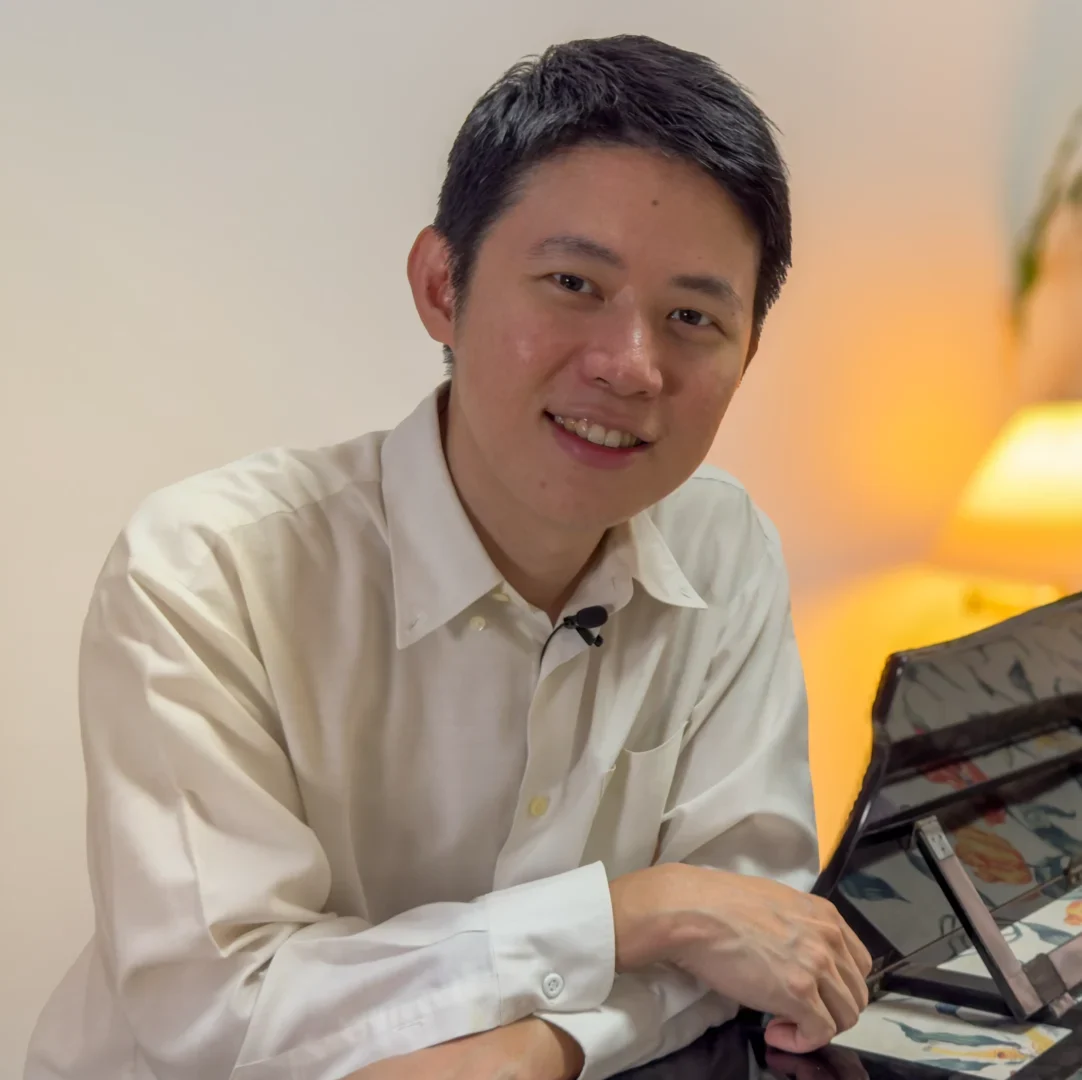
I’m Dr Azariah Tan, a classical pianist and music educator. I’m also a person with profound hearing loss.
I’m sure you understand what everyone wants to know: how on earth do you play the piano when you cannot hear?
Technically, I have profound hearing loss. I can still hear a bit, through the use of my hearing aids.
When I was first properly diagnosed with my hearing condition, I maybe had 50% of a normal person’s level of hearing. Right now, my level of hearing is closer to 15%, or 85% hearing loss. I can’t hear melodies, especially the mid to high registers like vocals or violins. It’s all muffled by now, even when I listen through my hearing aids.
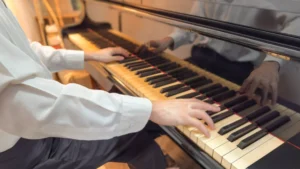
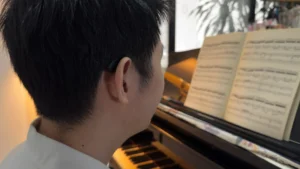
Today, I’m able to play primarily through the help of sheet music. Most classical musicians who play in an orchestra, for instance, have to be competent at reading sheet music. But this applies doubly so for me because of my situation.
The notations on the sheet tell me things like the rhythm, whether to play delicately or aggressively, and so on. I guess after almost 30 years of practice and training, this is just something I’m used to by now.
What kind of music do you play?
I’m a classical pianist. To put it in layman terms, I specialise in performing the kinds of pieces you hear from the Singapore Symphony Orchestra on radio stations like Symphony 924FM. When you think of Beethoven, Mozart, Chopin — that’s the kind of music I specialise in.
I do occasionally get asked to perform more modern pieces. In 2025, I was asked to represent Singapore at the Osaka World Expo, where I performed as the piano accompaniment to my friend and collaborator Claire Teo (who is herself a person with vision impairment), with her singing and me on the piano. We played songs like “Carrying You” from Castle in the Sky, “Always With Me” from Spirited Away, and “Million Dreams” from The Greatest Showman.

What does music mean to you?
Playing music has often been a source of stress relief for me. A comfort.
When I play, I often have visual associations with the melodies I’m imagining in my head.
Higher notes make me think of twinkling stars in the sky. I get an uplifting, sometimes soaring feeling. I’d say a good example of a piece that makes me feel this way would be the ending of the second movement in Ravel’s concerto in G Major.
Lower, moodier notes may invoke feelings of trauma, darkness. What comes to mind are the opening lines of Beethoven’s Piano Sonata No.32 in C minor.
Personally, I believe music is a way to make people feel something. It expresses our emotions, our joys and hardships. Maybe it sounds corny but I’d like to think that when I play, I can give people a brief glimpse of emotion, peace, or even overcoming difficult feelings such as pain and grief.
I remember one time I had the opportunity to perform for some senior citizens. Among the audience was a gentleman who had pretty advanced dementia, and was described by his caregivers as “completely unreactive”. After I was done, the music somehow had such an effect on him that he got up from his chair, came up to me to shake my hand, and exclaimed, “Magnificent!” I think all of us were quite taken aback by such a strong response from someone who was, frankly, supposedly losing their mental connection to reality. But I guess it really just goes to show what kind of emotive power music can have on us.
Even when our bodies fail us, even during our darkest hours, music connects with us like nothing else really does.
What was your journey like studying to be a professional musician?
I think it was a pretty natural progression for me. I was introduced to the piano when I was 4, shortly after my diagnosis of hearing loss.
Some people might wonder what would be the point of introducing music to a child with hearing loss. But really, why not? It’s not like people who are deaf or hard of hearing somehow enjoy performing or listening to music less than anyone else. Looking at where I am today, I’m pretty grateful my parents didn’t just give up on me participating in extra curricular activities like learning to play the piano, just because I had a hearing disability.
I probably was what you’d call more of a casual player when I was going through primary school. Around the age of 12, my parents then elected to homeschool me. Not only did I have a significantly more flexible path for my education, I had much more free time to practice playing the piano. That’s when I got a lot more serious about being a musician.
I later got my bachelor’s degree from the National University of Singapore (NUS) Yong Siew Toh Conservatory of Music, supported by the National Arts Council Scholarship. Then I went to the University of Michigan to study for my Master’s degrees in Piano Performance and Chamber Music, and my Doctorate in Piano Performance.
After graduating, I worked in Michigan for a while before returning to Singapore. I absolutely had the time of my life — Michigan is a beautiful state full of nature. But the United States is also a much more fiercely competitive market for musicians. I decided that it would simply be much easier to establish myself as a career pianist here in Singapore, where I would stand out. But I’m forever grateful for the time I had in America.
Do you have any ambitions of composing, recording music, or even touring?
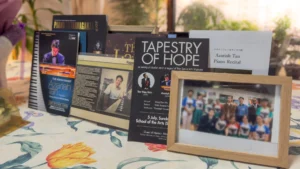
I’ve definitely done recordings of music. A while ago, I had produced a CD of Chopin’s pieces cut into an album titled (maybe in a somewhat corny fashion) “Azariah Tan plays Chopin: A State of Wonder”.
Apparently I was the first Singaporean pianist to attempt the composer Chopin’s pieces on a recording. Luckily for me, it was pretty well-received. I even got a pretty nice review on The Straits Times.
But touring? That’s not something I’ve really considered. If I have the chance to, it does sound pretty wonderful.
Unfortunately, I’m not sure if I really have the talent for composing. But I’ve started receiving requests to compose some work so… I’ll never say never.
What would you do if you lose your hearing some day?
I’m definitely very aware it could happen. And I’m not sure what it’ll mean for me as a pianist, but it’ll certainly make my job more difficult. The reality is that this isn’t something I have any control over.
I can do my best to take care of whatever hearing I have left. But my condition is also a degenerative one.
What has helped me emotionally prepare for this potential eventuality is reminding myself: being disabled doesn’t mean our lives no longer have meaning.
When Beethoven famously lost his hearing, he was actually very depressed. Quite understandably so. His loss of hearing coincided with a time of war in Europe, and he even tried hiding in a basement and covering his ears with pillows to preserve his hearing because of all the cannon fire and gunshots happening around him. Unfortunately, it didn’t really seem to help him in the end.
But then Beethoven of course went on to continue composing what could arguably be considered some of his best work, like “The Emperor”. Personally, I feel the heroic tone of “The Emperor” in particular might show us a part of Beethoven’s journey towards healing. By the time the concerto was done, it seems like he had accepted his hearing loss — even though he would struggle to perform as a pianist from then on, he could still create beautiful compositions. He was still determined to provide some kind of valuable contribution to the world.
I don’t know what I’ll do if I eventually go fully deaf. But if that time comes, I guess I’ll find out. And I won’t give up.
If you could give one piece of advice to fellow persons with disabilities, what would you say?
I think it’s really important for all of us, no matter who we are, to have a mentor we can turn to for guidance.
For me, a lot of my piano instructors, as well as my parents, acted as my guides and my mentors. I’m very grateful for them.
When we inevitably encounter some kind of hardship, it’s key to focus on growing and improving. We’re all shaped by our experiences, but sometimes we don’t always internalise it in a positive or healthy way. Losing my hearing could have very easily made me a bitter and resentful person, if I didn’t have people in my life to give me feedback, provide encouragement, and push me in the right direction.
I guess it’s also important for me to recognise that I was fortunate to have my mentors be the people closest to me. But if you need someone to turn to for guidance, reach out to someone you respect or admire for help. I think a lot of us are afraid of asking for help, because we’re fearful of showing others our weaknesses. But as the saying goes: ask, and you shall receive. Sometimes all it takes is asking the right person at the right time when you really need someone to be there for you, and that moment of bravery could change your life for the better.
I’m turning 35 this year. As I grow older, I think about what other kinds of contributions I can make to my community. Maybe some day, I can be that kind of positive influence and source of guidance to someone else.