Sky Shen
“Wheel You Love Me?” Questions About Love from a Person with Disability
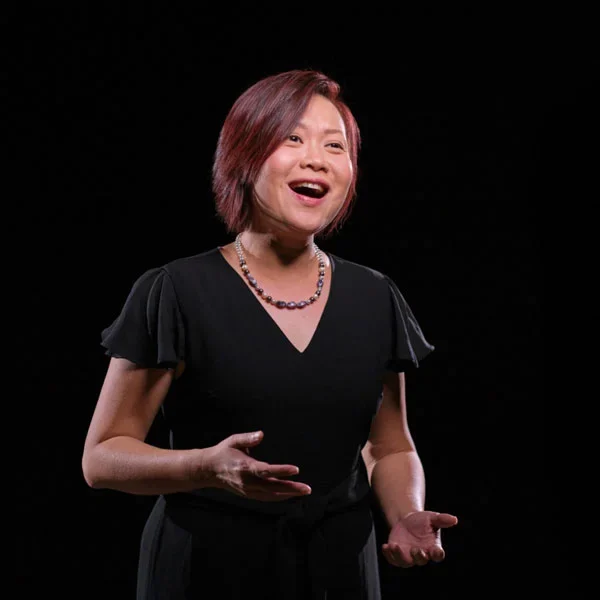
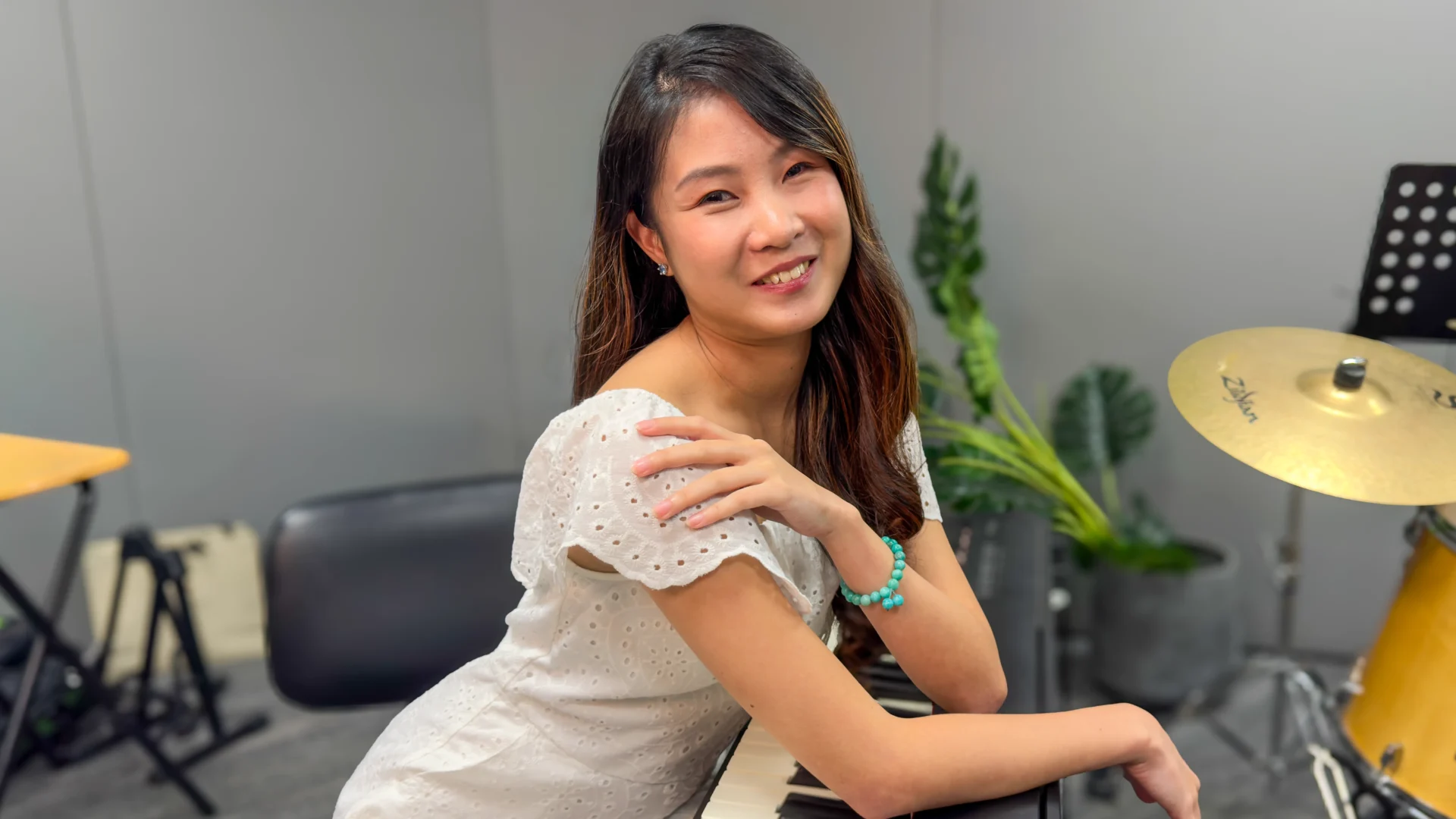
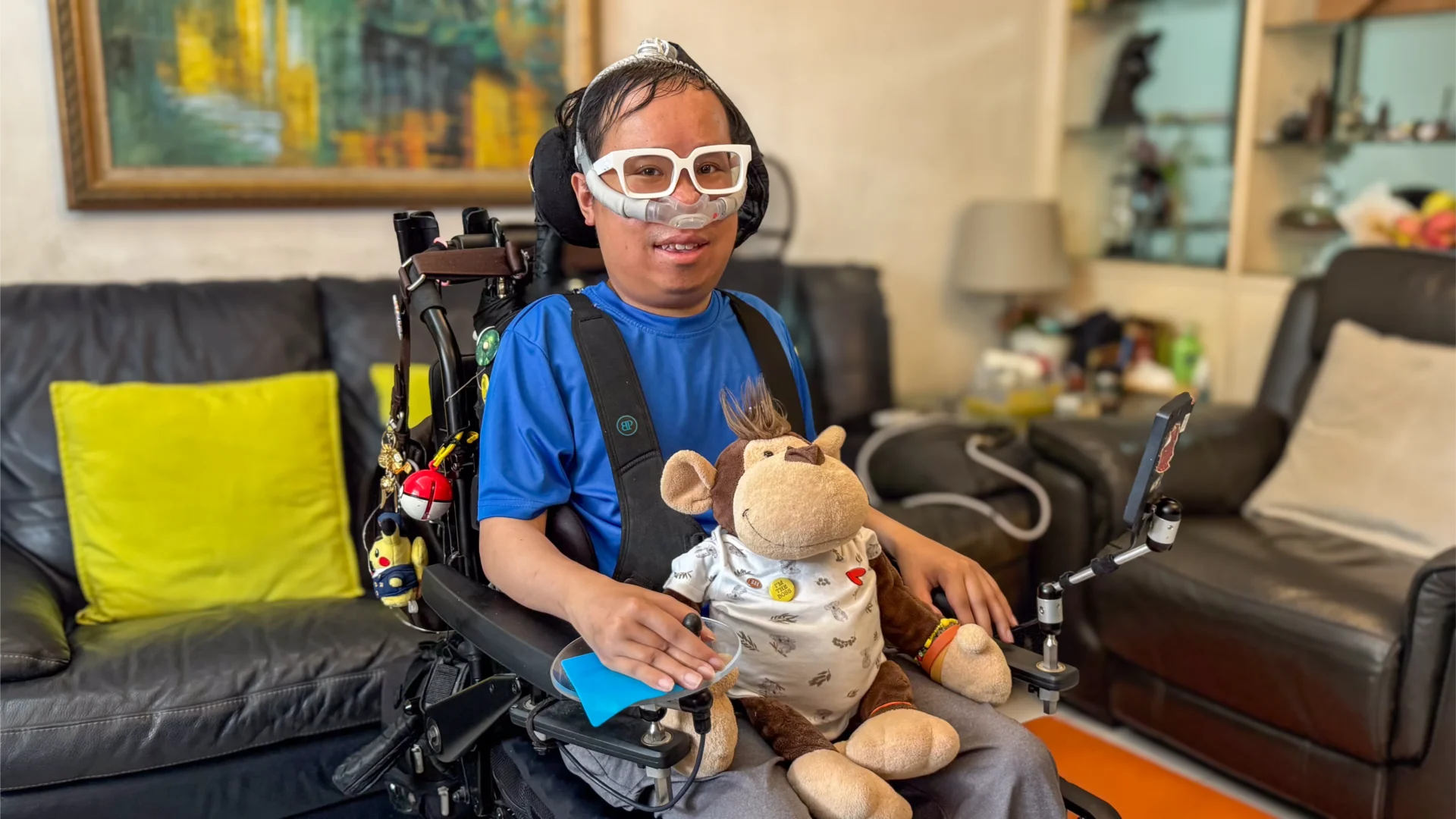
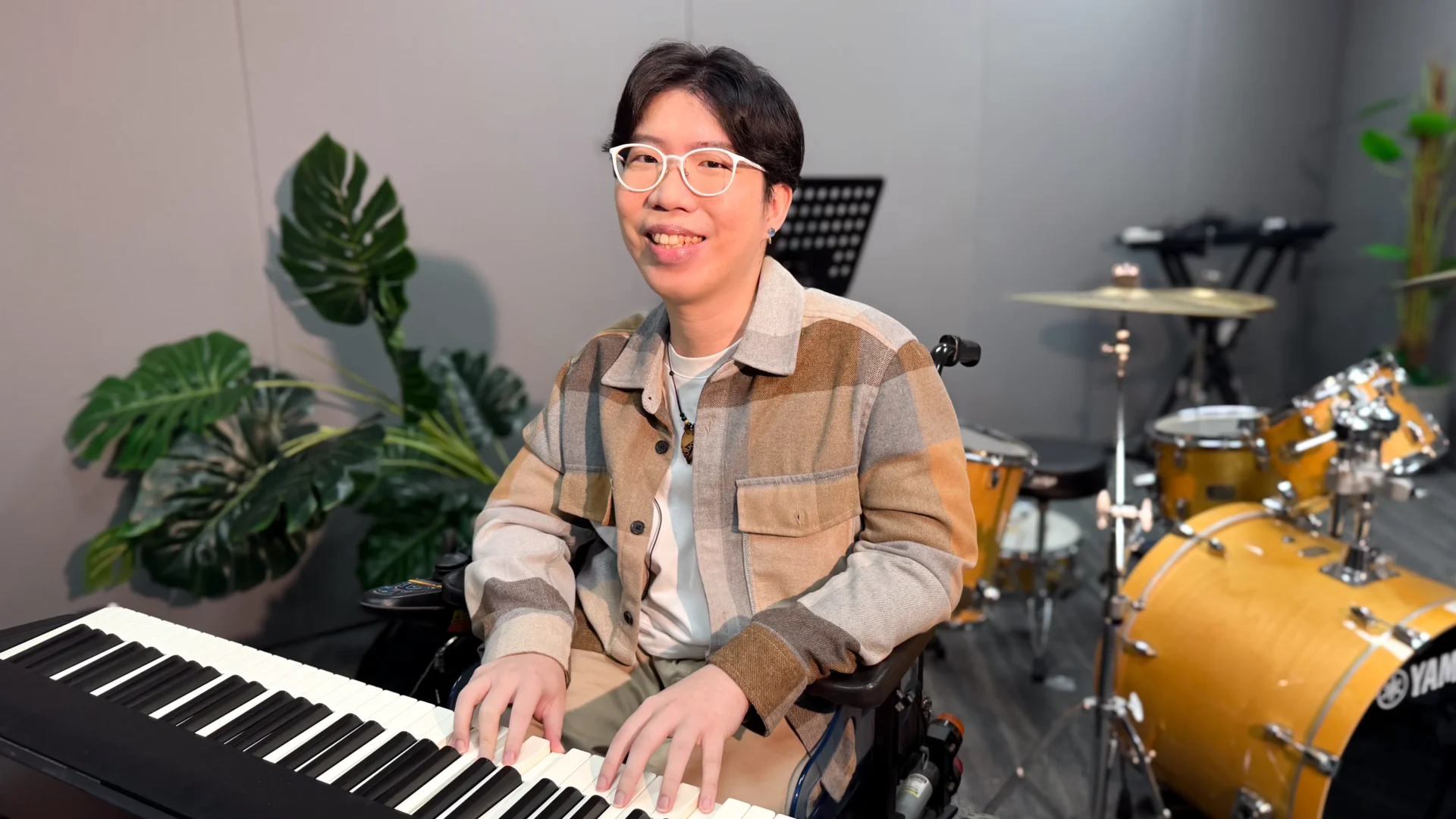
I’m Sky Shen, a singer-songwriter and arts educator.
What motivated you to write the music in your debut album “Wheel You Love Me?”
They say that if you have never loved, you have never lived. So much of what we see in various media is about love – how it’s universal, noble, and the greatest force to ever exist.
But growing up, I never felt like I went through the same experiences my peers did. You know how we joke about the most dreaded question at Chinese New Year gatherings – “when are you getting married?” – nobody ever asks me that question.
We laugh about it, saying that dodging this awkward question is a source of relief. But I think this difference says something about the assumptions around people with disabilities, and maybe they are worried that no one would want to love someone like me. So for my debut EP album, I wanted to share my own perspectives and experiences with romantic love as a person with a disability.
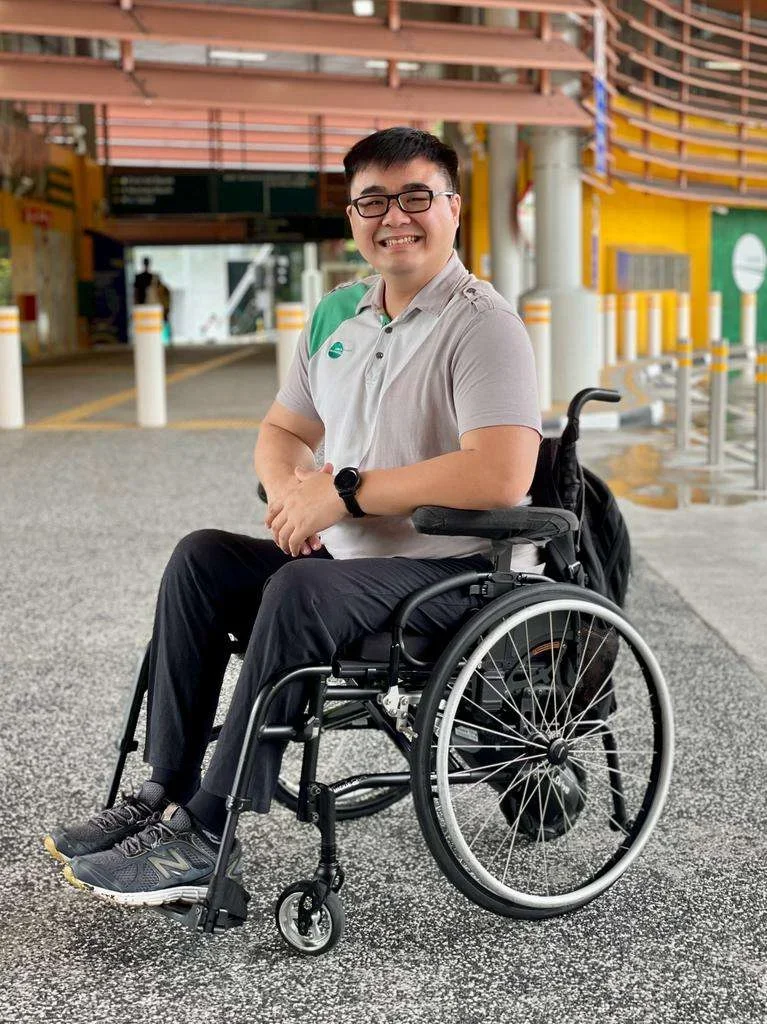
My disability is definitely visible, especially after I started needing to use a wheelchair. I have muscular dystrophy, which is characterised by a weakness of muscles, including the heart. It also affects other organs, like my lungs.
What are some of the unique experiences and challenges persons with disabilities face in the realm of love and romance?
I actually did quite a bit of exploratory research on this topic when I was studying for my sociology degree in university. Research seemed to show that less persons with disabilities had experiences of romantic relationships compared to non-disabled people. Even when they did, the relationships were more likely to be exploitative or abusive, and persons with disabilities were more likely to engage in riskier behaviours.
When you think about it, this is a very sad reality, but it does make a lot of sense how this happens. People with disabilities can be more vulnerable both physically and emotionally. And that means they can unfortunately be taken advantage of if they get into a relationship with the wrong person, or with someone with bad intentions.
I think that sometimes, we feel the need to over-compensate for our perceived shortcomings as people with disabilities. Some of us become overly eager to please, and that can leave us exposed to bad situations. .
When I wrote the title track “Wheel You Love Me?”, I wanted to explore the sense of loneliness that we feel, when we are ignored as eligible dating candidates. It is a form of loneliness that almost had me questioning if there was something wrong with me that prevented people from accepting people like myself.
愛輪到我沒 地球有7億的人類
Translation: Love, is it my turn? There are 7 billion people on this Earth
要我怎麼相信沒人和我登對
Translation: How am I to believe that not a single person is compatible with me?
愛輪到我了沒 等到快要入睡
Translation: Love, is it my turn yet? I have waited so long I’m about to fall asleep
愛輪到我沒 我到底有什麼不對
Translation: Love, is it my turn? Just what is so wrong with me?
為何還沒好好愛過 就心碎
Translation: Why is my heart already broken before I even got to love?
我就快 要枯萎
Translation: I’m about to wither away
Wheel you love me?
I also feel that a lot of the discourse around disabilities is about our medical needs, or helping us with caretaking, support programmes, and so on. Especially in a country like Singapore where our medical infrastructure is very robust. This has resulted in many people with my condition having significantly longer life expectancies, which I’m very grateful for.
But besides extending our life expectancies with improved care, I think that an equally important thing that needs to be discussed is – what are we going to use that life expectancy for?
I wish for discourse around disabilities to go beyond “how do we keep us alive?” to include “how do we empower us to live meaningful, fulfilling lives?”
So through my songs, I wanted to explore some of these ideas through the lens of someone with a disability like I have. Of friendship, loss, courage, and the journey through life ahead of us.
After the release of “Wheel You Love Me?”, how did listeners react to your music?
What really surprised me was how my songs were received, especially by non-disabled people. The realisation I eventually came to was — despite the perspective I was writing from as a person with a disability, the realities, insecurities, and feelings of loneliness are very universal and relatable to everyone, regardless of whether or not they had a disability.
I initially wrote the songs in the album as a way to present the unique identity of persons with disabilities like myself. But as it turns out, my music actually ended up showing how similar we all are inside.
I once performed some of my original songs at a gig, where a small group of people came to support me… Then they started singing along to my music! My songs about finding love with a disability has somehow turned into a connection point for all sorts of people to relate to and enjoy.
I was very, very touched. I originally wrote my songs from my bedroom, not expecting anyone to really care. To be on stage and have people recognise and sing my songs? It was one of the most humbling and gratifying feelings in the world.
Is there more music coming from you soon?
Yes! I actually am working on two projects right now.
The first project is an EP called “The Little Critters”, with songs about our emotions. I want to re-write the narrative of mental struggles being “demons in our heads” to “annoying little critters we can learn to live harmoniously with”. It is a project that goes beyond music and includes a visual element – representing our emotions through little mascots that serve as visualisations of how I experience them.
Without giving too much away, let me describe some of the critters which I’m working on. The critter for Anger is a little red dude that looks like a mask, because we often use anger to mask something deeper within us, like fear, sadness, or resentment. Right now, the critters all kind of look like jellybeans, maybe think something like “Inside Out” meets “Sumikko Gurashi”.
Many of the songs for “The Little Critters” have been written and just need work at the production stage. We are also expanding the project through an exhibition, where audiences are invited to explore their emotions and manifest their own little critters, drawing them to express their deepest feelings and sharing them for discussion.
The second project is called “I’ve Gone Crazy”, exploring the life experiences that basically make your friends and loved ones react by telling you, “You siao ah?” (Hokkien word for “crazy”).
The current line-up of songs actually includes “March On”, the anthem I wrote which was the official theme song for Team Singapore at the 2024 Summer Paralympic Games. It takes a kind of crazy – a good, powerful kind, to be clear – to choose everyday to wake up and defy the odds. To fight seemingly impossible challenges to pursue dreams that ordinarily wouldn’t even be considered a possibility. I have mad respect for my Paralympian friends and am very proud of not just their achievements, but their spirit and for being the people they are.
The other songs for “I’ve Gone Crazy” are still in development. I’m hoping to have new songs completed for release by this year.
What is your hope for disability inclusion in Singapore?
To me, true inclusion means integration. I feel like there’s still a very big separation that exists between the disability community and the rest of Singapore.
A big part of the problem is that many of the disability-accessible spaces we have are completely isolated from the spaces non-disabled people go to. For example, for leisure, my peers with disabilities may partake in activities like boccia, or go to programmes by social service agencies that engage us through specialised sports or art therapy. In comparison, my non-disabled friends meet up with each other to go to the gym, karaoke, or any other number of places which may not be built to accommodate people like me.
Don’t get me wrong, I’m grateful that we have some disability-friendly spaces in the first place, but we’re definitely missing out sometimes on the kind of opportunities for social mixing that makes us feel truly connected to the rest of society.
In Singapore, our building codes for accessibility means new physical spaces are being built with a greater understanding and consideration of people with disabilities, and I hope this means more of our community spaces will be welcoming to people like us moving forward.
At the very least, the online world has allowed for more opportunities to make human connections. When I first started writing music, I did feel very alone. But posting my art online has allowed me to reach people in a way I would never have imagined was possible.
The fact that there are some people out there who would, listening to the words I have to say, it’s comforting. I don’t feel as alone anymore.