Claire Teo
I Don’t Always Succeed, But That’s Ok
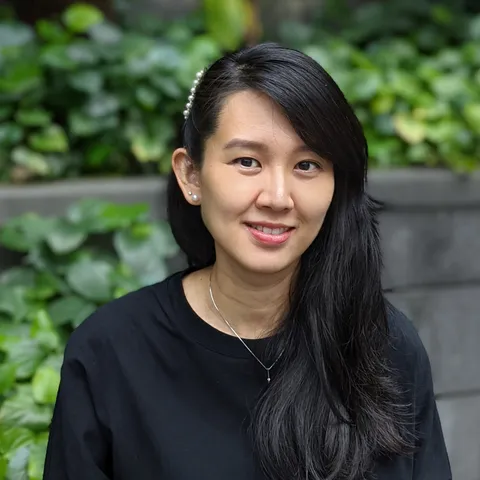
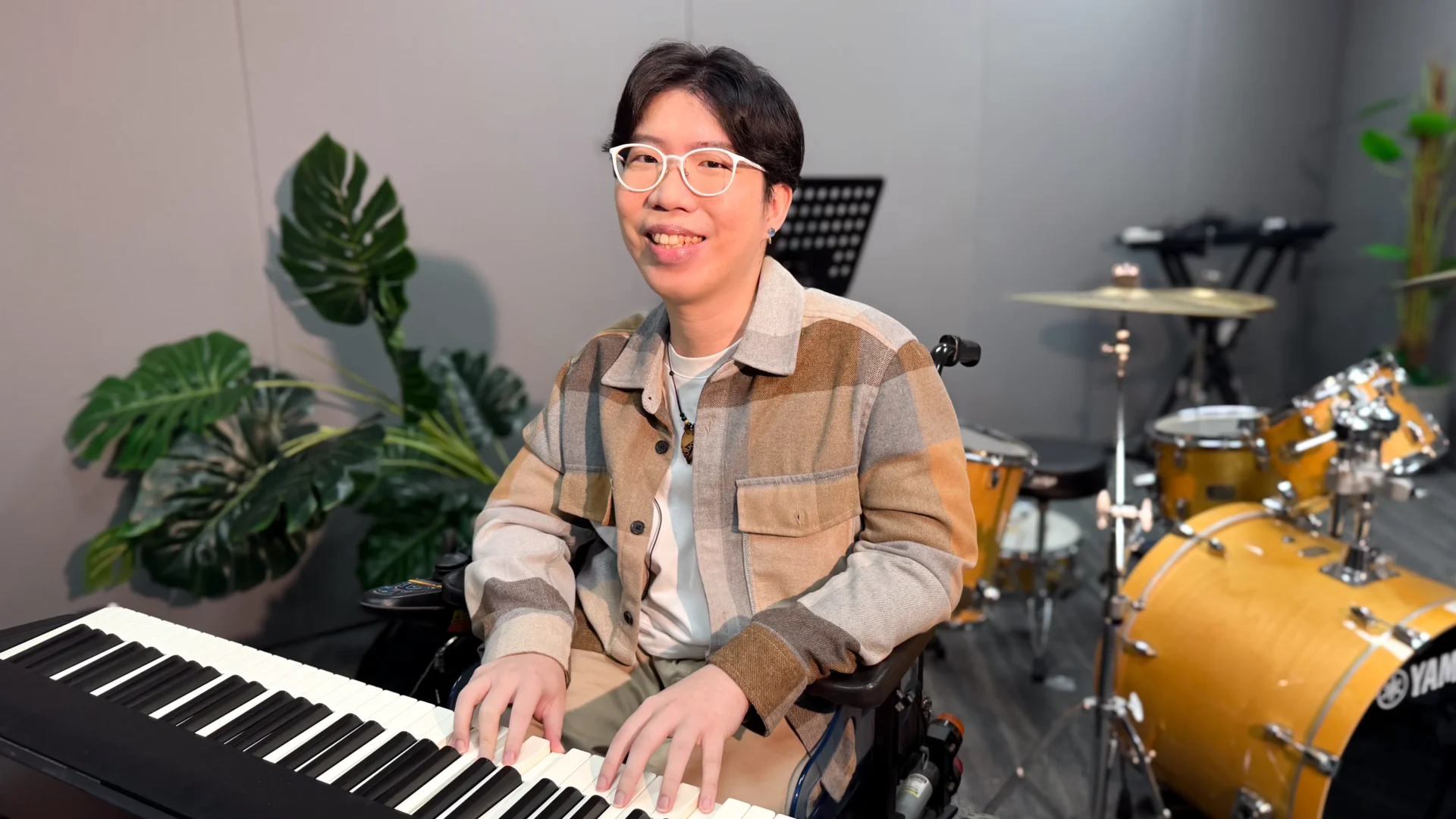
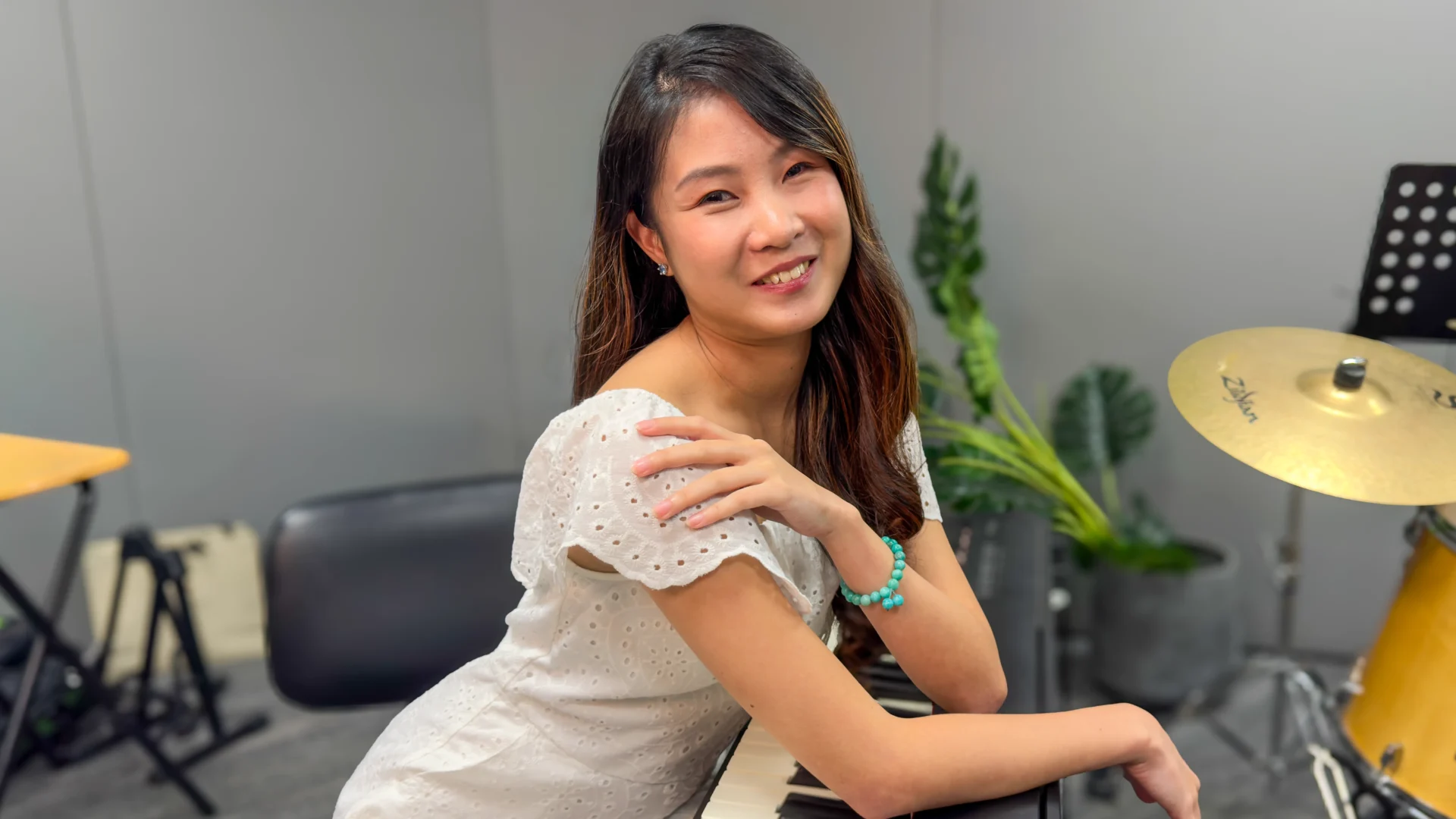
Claire Teo is a performing artist, singer, and arts educator, a career she has carved for herself despite losing her vision in her late teens. Her performances have been hosted at the National Gallery (Light to Night), Esplanade, and more.
How would you describe yourself as an artist?
That’s a tough question. I think I go wherever the vision for the project takes me (pun not intended). But what I love first and foremost is performing.
I can sing, I can act, and I’ve even trained in martial arts and ballet. Just don’t ask me to do any kind of modern dance – that’s definitely not a skill I have right now!
In terms of what kind of work I focus on, I primarily hone in on raising awareness about social issues. To give a voice to the under-represented and unheard.
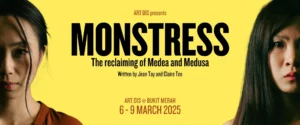
Promotional poster for ‘Monstress’ (2025), starring Oong Shu An and Claire Teo in the lead roles
What about being an artist brings you joy?
I love performing. I love the freedom my art gives me to express myself.
But I think one of the most fulfilling parts of my journey has actually been teaching.
I think this is one of the biggest ways I’ve surprised myself. I used to tell people I’d never have the patience to teach anyone anything. But here I am – with a whole class of students on the autism spectrum no less!
To be honest, it was just a job to me at first. But it’s now the most meaningful thing I have going on in my life right now.
I teach singing lessons at Art:Dis (an arts education organization for persons with disabilities), and my class consists of nine students with very different needs. Some are even non-verbal. But through them learning music, I’ve seen them start mouthing words, experimenting with pitch, engaging in ways that they don’t always want to when they attend their traditional speech therapy sessions.
Because when they go to a hospital, that’s boring. That’s scary. It’s an obligation. But music is fun, so they naturally gravitate towards it. And even though I can’t see their faces, I can hear the spark of joy in their voices.
I honestly believe there’s something so pure in the way they connect with music. When I get a singing gig, it’s all about how much I get paid, where’s the location, and who it’s for. But with my students, there’s no ulterior motive behind their motivations to sing. Through them, I feel like I get a very different appreciation for art all over again, and it makes me smile.
It’s very moving. No matter where my career takes me, this experience will always stick with me.
Can you describe what your vision impairment is like? How do you perform as an actor with vision impairment?
I have an eye condition called retinitis pigmentosa. To describe it simply, it leads to my vision getting blurrier and narrower over time.
Right now, I basically can’t see anything. Sometimes, when there’s a particularly bright and vivid sunset, I can still see some colours. It’s something I still hold on to.
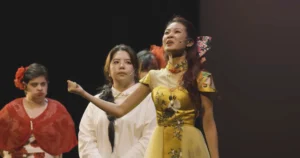
Claire performing as Ming Zhu, the protagonist in ‘Chachambo: Taking Flight’ (2022)
To perform as an actor with a vision impairment, most of the issues are really just logistics. I have to practice harder to memorise scripts because I can’t just refer to them easily. I have to spend a bit of extra time familiarizing myself with the physical space and movements so I don’t fall off a stage, or smack my co-stars by accident. Yes, it’s extra work, but it’s honestly not an insurmountable challenge. As with all things, it just takes time and practice.
In fact, the biggest hurdle I’d say I encounter is, for better and for worse, the people around me. I’m constantly being asked if I’m alright, if I’m comfortable doing XYZ, or if it’s really safe for me to do even mildly physical performances. I know it’s very often coming from a good place. People just want to be kind and thoughtful. But it can also drive me a little crazy after I’ve heard it hundreds of times.
Tell us about a project that has meant a lot to you.
One of the projects I am currently working on right now is a re-work of “Monstress”, a piece I had written and performed in 2025. It’s now being revamped for an upcoming run at the Esplanade, which I’m very excited for.
The story follows two women who aren’t always at their best, connected by a boy who is autistic. One is trying to be the boy’s friend, and the other is his mother and caregiver. Through the story, I want to explore and portray the complex realities of disabilities, of caregiving, and the messy way we navigate through life.
Sometimes, the ugly parts of us come out, even when we’re trying to do the right things. And that’s the monstress.
During its first run, there was some really good feedback about the show, and we’re incorporating that into the revamps. I don’t want to reveal too much besides that. You’ll just have to come watch it live once it’s done.
But this is a story that means a lot to me. From the exploration of what it’s like to be a woman, to the realities of caregiving that we don’t often talk about, this is what I mean when I say I love bringing under-represented stories to life with artistry.
What other ambitions do you have for the future?
There’s two big areas I really hope to make a contribution to in the arts sector.
First, I really believe there’s a giant untapped opportunity to bring artistic works from Singapore to a global audience. People always say we Singaporeans aren’t creative, and I absolutely don’t agree. I think maybe it’s more accurate to say that Singaporeans aren’t often risk-takers. But for those who dare, or who have the right sources of encouragement, beautiful things can really happen. I’m proud of our country’s artists, and I sincerely believe there’s a way we can market our works to audiences all over the world.
For me, I have a number of theatrical screenplays that I’m hoping to adapt to the big screen. Whether it’s as a film, or a show for streaming platforms, I think that’s the next big frontier for me as an artist, and would expand the reach of my work to a much bigger audience. But that’s still something I’m working on right now.
The second is maybe a bit more personal to me. I want to create more opportunities for persons with disabilities in the arts. And I don’t just mean persons with disabilities being artists or actors, though that’s definitely important too.
I really mean accessibility – opening up the arts for people with disabilities to enjoy just like everyone else. Don’t get me wrong, there’s been a big improvement over the past few years.
For example, many theatrical stage performances from SRT and Wild Rice now come with audio described shows, where people with vision impairment can listen to live narrated descriptions of the show through earphones, delivered by a professional.
But not all shows are able to be audio described. Part of the issue is that not all people with vision impairments want to attend theatrical performances in the first place. And of course, if a project does not have the allocated budget to do audio descriptions, the organisers will just go ahead without such accommodations.
All that said, I’m very grateful for how far we’ve already come. The fact that people are paying attention to these issues at all is a blessing, and I hope my peers in the arts understand that I’m very appreciative of that.
What advice would you give to other people in the disability community?
I think a lot of people I know see where I am right now and want to tell me that they’re so inspired, that I must be so resilient, that I’ve worked so hard.
But I don’t always feel inspired. I don’t always know what to do. And sometimes, things go wrong and I just want to flop onto the floor.
I haven’t always succeeded at the things I’ve tried to do. Some projects I’ve worked on have gone nowhere. Sometimes, I get into dry spells where nothing seems like it’s working and it’s one rejection after another.
A while ago, I applied for a role in a really major production that would air on a global streaming platform. This was for a female lead character in the show, who is a person with vision impairment herself.
The casting director wanted someone who was Asian, not too tall, could play the role of a young person, who had martial arts experience, and priority would be given to persons who were vision impaired for authenticity. I was extremely excited – because that’s exactly me!
I made it through two rounds of casting interviews and even met the producers for the show, but I wasn’t picked in the end. I believe the role eventually went to someone who isn’t vision impaired, which I can understand but it was still a personal disappointment.
What I’m getting at is: sometimes, things just won’t go our way. Perhaps more so when we have a disability, and encounter personal challenges. It’s ok to be frustrated, to cry, and to let yourself feel the pain of encountering an obstacle. Though no one ever sees it, I’ve done and felt all of that many times. That’s life.
And I think for people with disabilities, sometimes we feel like we have to over-compensate for our shortcomings. After all, many of us often measure our personal value through our accomplishments. But disabled or not, we can’t be amazing all the time.
Ultimately, I’m not defined by my failures, my disappointments, and the things that never came to fruition. I’m defined by my actions, and the kind of person I want to be.
I think it’s important for us to take back this source of empowerment for ourselves, because I truly believe it’s what makes the difference when things don’t go the way we hope.