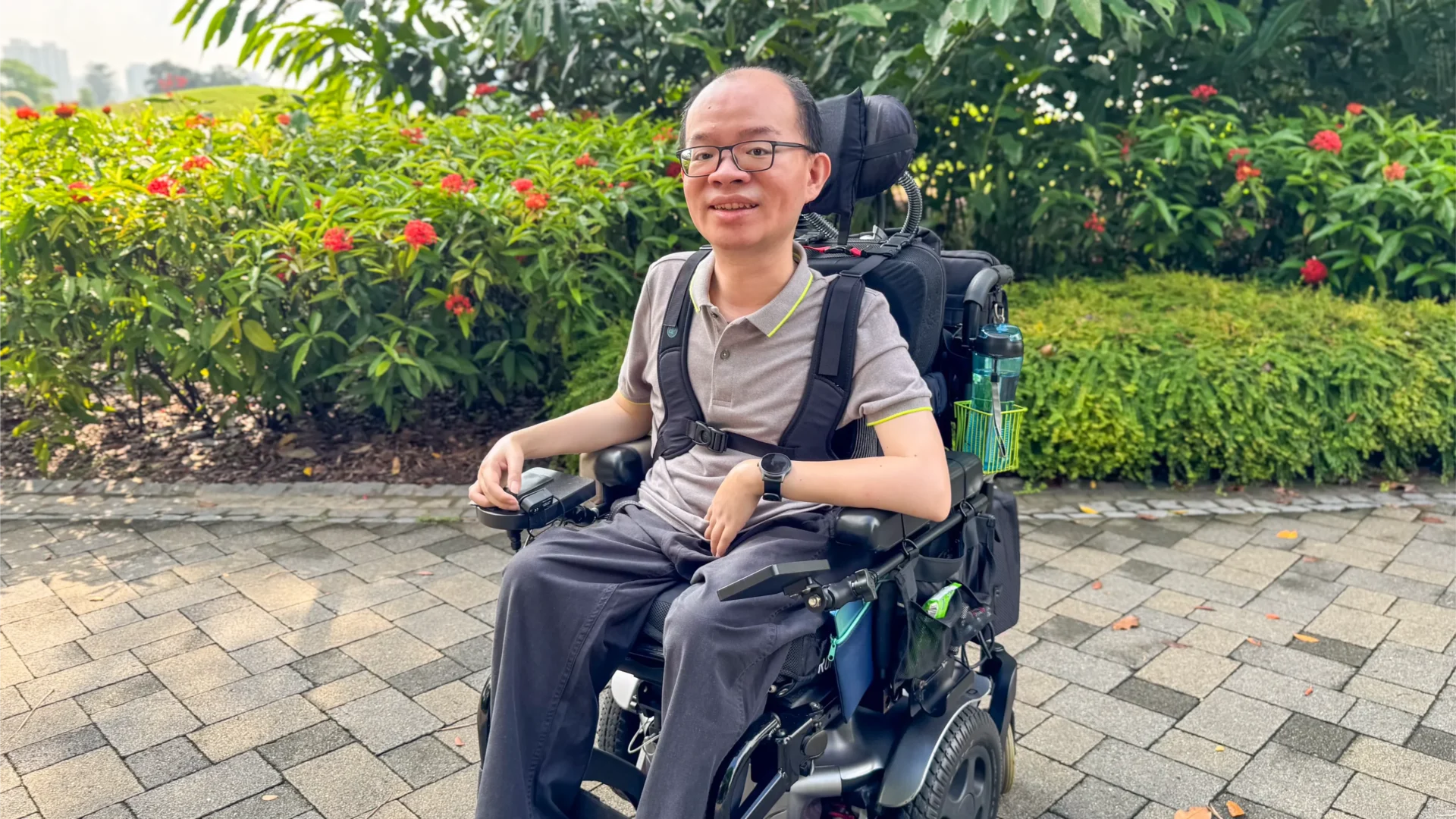
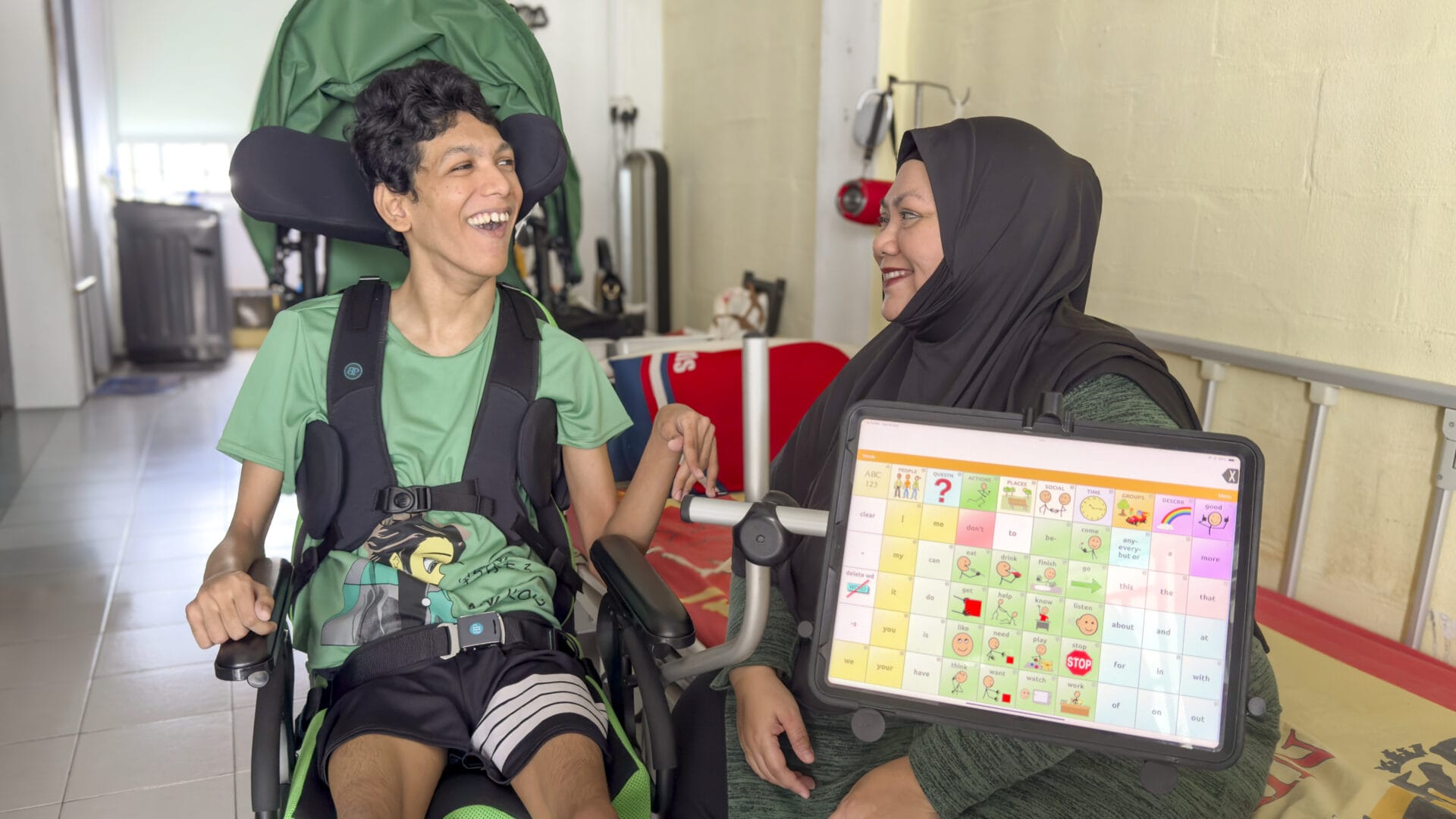
Madam Fadillah and Mr Sayfullah
Technology Has Given Me My Voice.
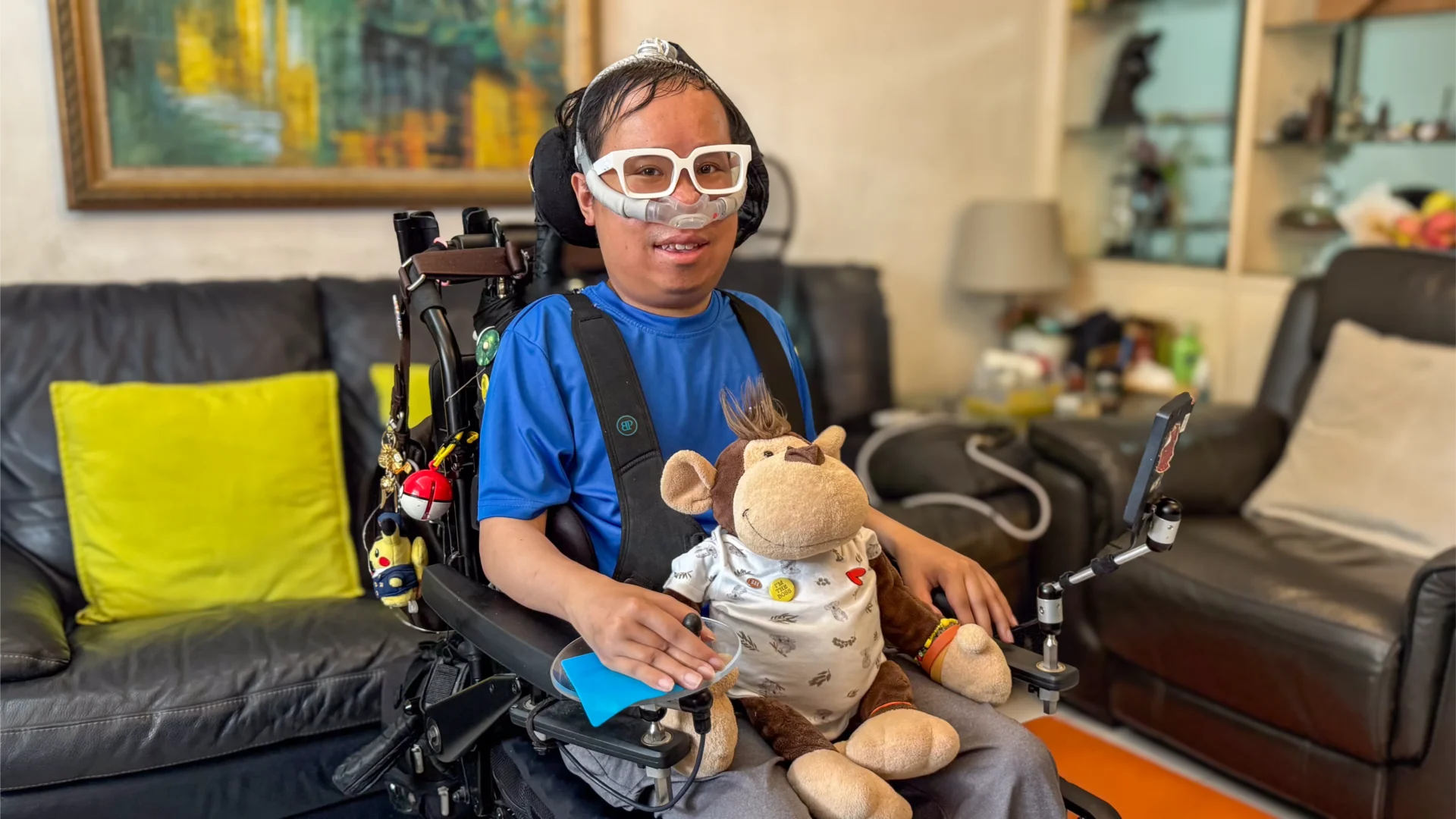
Madam Fadillah and Mr Sayfullah, a mother and son duo known online as “The Inclusive Pair”, advocate for a more inclusive future for persons with disabilities who have speech limitations. Sayfullah has quadriplegic cerebral palsy, which limits his abilities to speak. Fadillah is his mother and caregiver.
To Sayfullah: How do you “talk” if you have limited speech?
I use an app on my iPad called TouchChat that allows me to press buttons to say words and phrases. This is called augmentative and alternative communication, or AAC technology.
Instagram video URL: https://www.instagram.com/p/DHiFe4NKgyD/
Did you know?
Many persons with disabilities use different types of assistive technologies to perform every day tasks. For example: AAC allows persons with speech limitations to speak digitally; hearing aids enhance audio for persons who are hard of hearing; talking devices and screen readers allow persons with vision impairments to interact with household electronics, computers, and smartphones. Technology is incredible!

There are also “low tech” versions of AAC, which are essentially pieces of paper with printed pictures and icons that I can point at to communicate what I want to say.
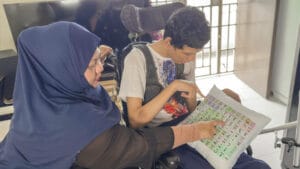
This isn’t always ideal because not everyone understands what the pictures mean. And it doesn’t work at all if I’m having conversations with friends who have vision impairments. But I have to rely on it sometimes if my iPad runs out of battery.
To Sayfullah: What do you wish people knew more about assistive technologies like AAC?
AAC technology like the TouchChat app allows me to communicate independently. I can use it to introduce myself, order food, and have conversations. The most famous person to use AAC technology was the late Stephen Hawking!
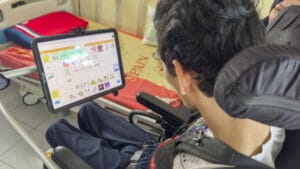
AAC isn’t just used by people with physical disabilities like me. People who are non-verbal or autistic can also use AAC apps on their phones or tablets to communicate verbally with others.
One challenge with AAC is that it takes me time to use the app to form a reply. But not everyone is always patient enough to wait for me to finish speaking. It can take me about 30 to 45 seconds to form a sentence – it used to take me 1 or 2 minutes in the past, before I received training to use the AAC app more quickly.
Not only do I hope more people in the world better understand what AAC technology is, I hope more people in the disability community learn to adopt it. AAC gives people like me the freedom to speak freely, so we can express our own thoughts and ideas.
To Fadillah: What was it like raising Sayfullah?
As Sayfullah’s mother, I naturally worried a lot when Sayfullah was growing up. Sayfullah’s cerebral palsy also meant he had global developmental delays, so he had to learn things at his own pace.
Eventually, I think I recognised we can only do our best with the things we have control over. So I did my best to ensure Sayfullah would always be challenged, always learning, so he can grow into the person he wants to be.
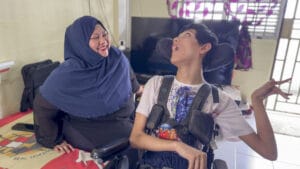
Sayfullah also constantly finds ways to surprise me. One time, he told me, “Mommy, I want to go to Russia!”
Naturally, I asked him, “What do you want to do in Russia?” He explained that he wanted to bring Singapore cuisine there and set up a café. But it initially wasn’t clear: why Russia?
Eventually, he explained, “I want to go to Russia to see if we can do something to stop the war.”
Sayfullah loves to read about global politics. He watches soccer matches religiously. He enjoys dancing to Bon Jovi and Michael Learns to Rock.
What I hope for Sayfullah most of all is that people can see him for more than his disability. To recognise that he is his own person, with his own voice, ideas, and aspirations.
Instagram video URL: https://www.instagram.com/p/DHidBpNqVNg/
To both: What do you think we can do to build a more inclusive society in Singapore?
Sayfullah: I hope people can be more patient with me, and give me the time to speak with my AAC. I remember one time, I wanted to participate in a team cheer at an event, but I couldn’t say the words. It made me feel a little left out. Luckily, mom was able to record her voice into my AAC app so I could play it back, and the team was kind enough to give her a bit of time to do this before the next cheer. So I had a “woman’s voice” for an afternoon… But I could finally feel like I was part of the group! I hope more people can be inclusive like that.
Fadillah: I hope more service staff are trained to understand what AAC is, so people like Sayfullah can have a chance to participate in society. We’ve definitely gotten puzzled looks when I encourage Sayfullah to speak up for himself when we’re at the hospital, ordering food, at the movie theatre – and I do understand AAC is a method of communicating that they’ve never seen before. I think it’s just a matter of staff being taught about how to offer inclusive service to persons with disabilities. When people like Sayfullah can go out into the world and no one thinks twice about his “talking iPad”, I think that’s what true inclusion looks like.